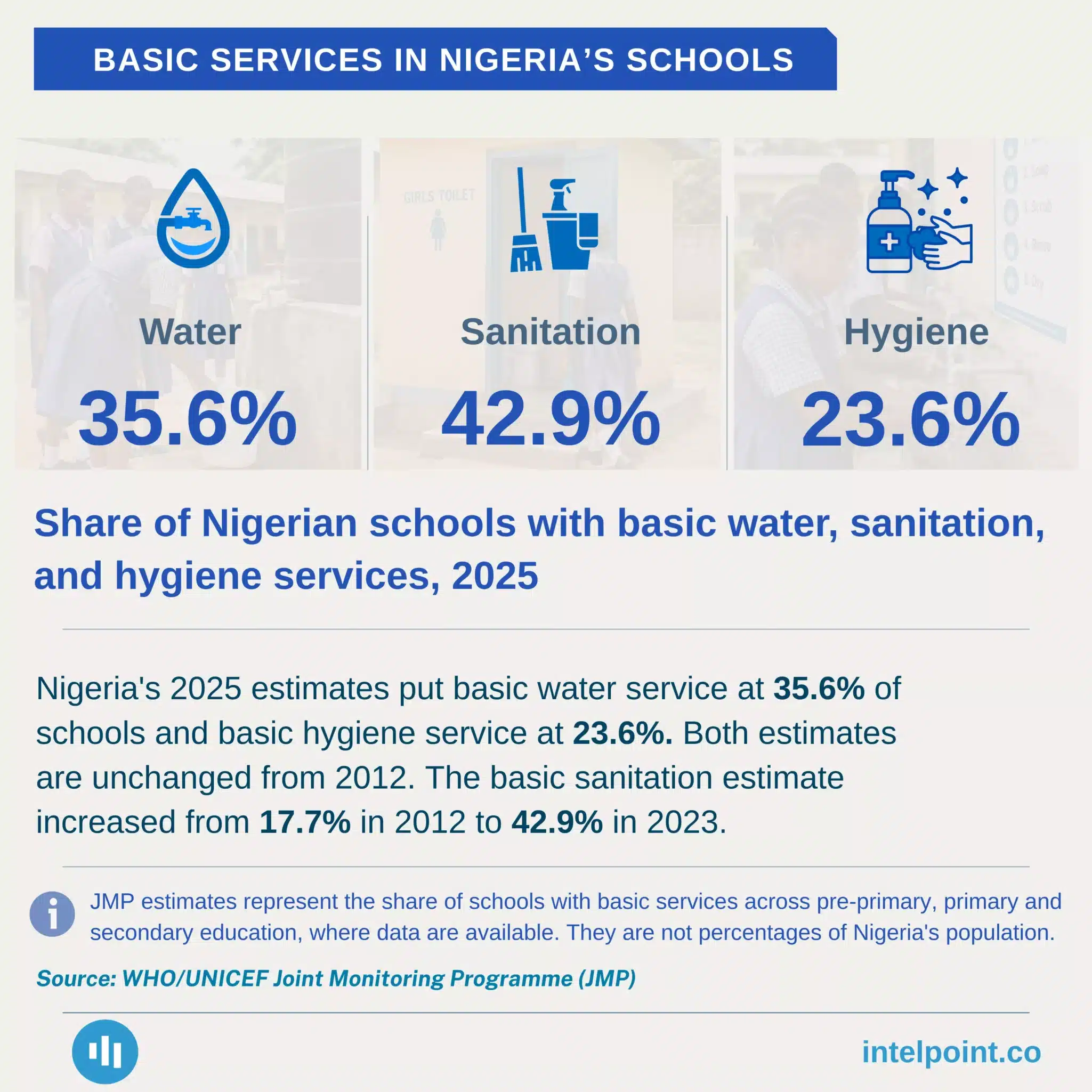
Share of Nigerian schools with basic water, sanitation, and hygiene services, 2025

Key Takeaways

  • 64.4% of Nigerian schools lacked basic water services, while 57.1% lacked sanitation and 76.4% lacked hygiene.
  • Basic water and hygiene coverage remained unchanged from 2012, while sanitation coverage rose to 42.9% in 2023.
  • Rural schools lagged urban schools in water access, 29.9% vs 47.9%.
  • The sanitation gap was wider, with 33.1% of rural schools covered versus 63.5% of urban schools.

Most Nigerian schools lacked basic water, sanitation or hygiene services in the latest available estimates. An estimated 64.4% lacked basic water services, 57.1% lacked basic sanitation and 76.4% lacked basic hygiene. The latest water and hygiene estimates are unchanged from the 2012 estimates, while the sanitation estimate has risen from 17.7% in 2012 to 42.9% in 2023.

Access also varied sharply by location. Only 29.9% of rural schools had basic water services, compared with 47.9% of urban schools. The gap was even wider for sanitation, at 33.1% in rural schools versus 63.5% in urban schools, showing that national coverage figures conceal a substantial rural disadvantage.

Source:

WHO/UNICEF Joint Monitoring Programme (JMP)

Period:

2025
HTML code to embed chart
Want a bespoke report?
Reach out
Tags
Related Insights

People practising open defecation (% of population) as of 2022
Africa's sanitation crisis is alarming, with 17 of the top 20 countries having the highest open defecation rates. Eritrea (67%), Niger (65%), and Chad (63%) lead, putting millions at risk of disease. Even Nigeria, the most populous African country, has 18% of its population practising it.

POPULAR TOPICS
SIGN UP TO OUR NEWSLETTER
Get periodic updates about the African startup space, access to our reports, among others.
Subscribe Here
Subscription Form

A product of Techpoint Africa. All rights reserved