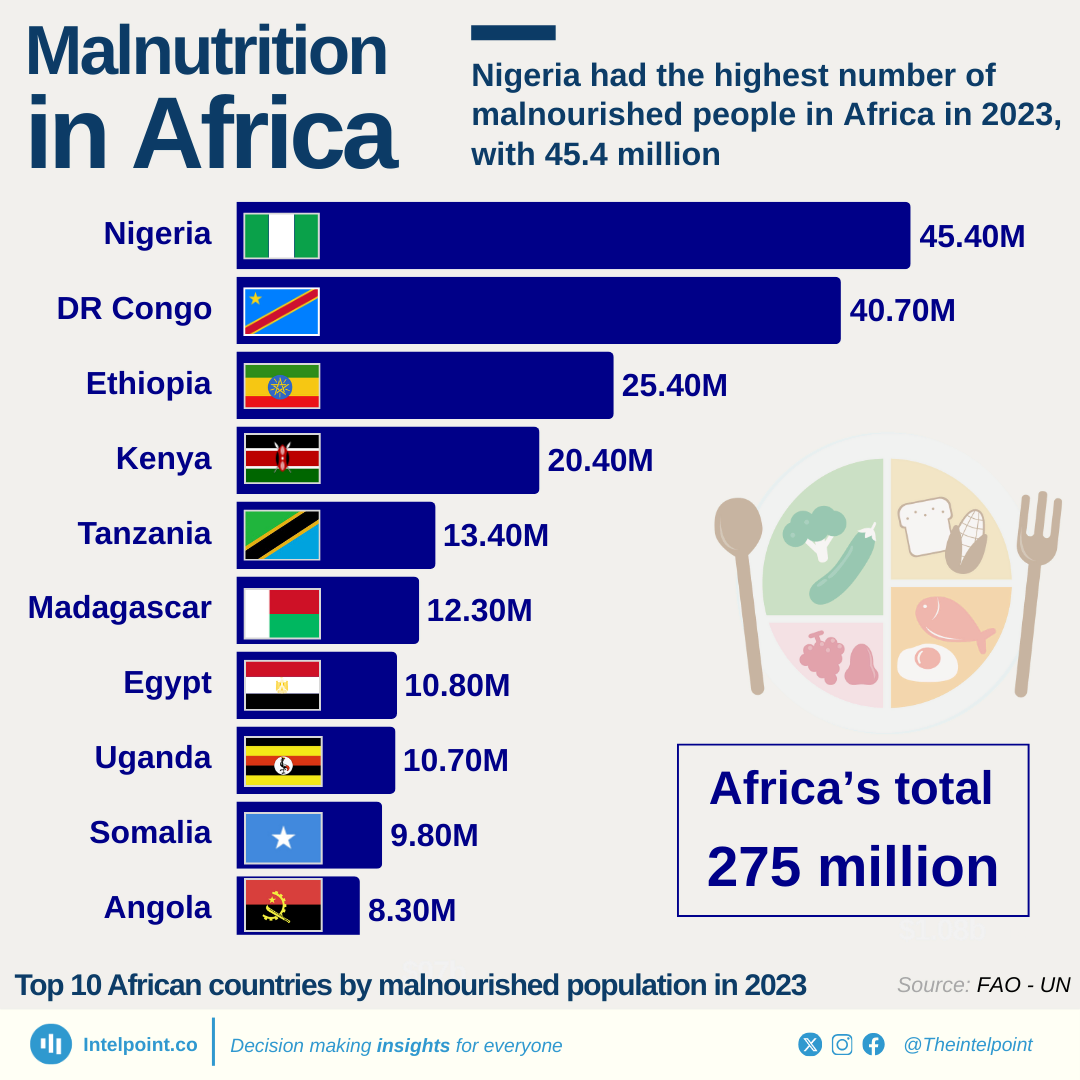
Nigeria had the highest number of malnourished people in Africa in 2023, with 45.4 million

Key takeaways:

  • In Africa, 275 million people were recorded to be malnourished in 2023.
  • Nigeria led the list of countries in Africa with the highest number of malnourished people (45.40 million), making 16.5% of the total.
  • Nigeria was followed by the Democratic Republic of Congo with 40.7 million, 14.8% of the total.
  • Nigeria, the Democratic Republic of Congo, Ethiopia and Kenya made up almost 50% of the total number of malnourished people in Africa.

In 2023, over 275 million people across Africa were recorded as malnourished, making over 18% of the African population. This staggering number reflects a deepening crisis affecting millions of households across the continent. Nigeria topped the list of African countries with the highest number of malnourished people with 45.40 million people, accounting for over 16.5% of Africa’s total malnourished population.

The Democratic Republic of Congo followed closely behind [Nigeria, with] 40.7 million people recorded as malnourished. This figure represents 14.8% of Africa’s total malnourished population. Collectively, Nigeria, the Democratic Republic of Congo, Ethiopia and Kenya accounted for almost 50% of the total number of malnourished people in Africa.
Source:

Food and Agriculture Organization of the United Nations

Period:

2023
HTML code to embed chart
Want a bespoke report?
Reach out
Tags
Related Insights

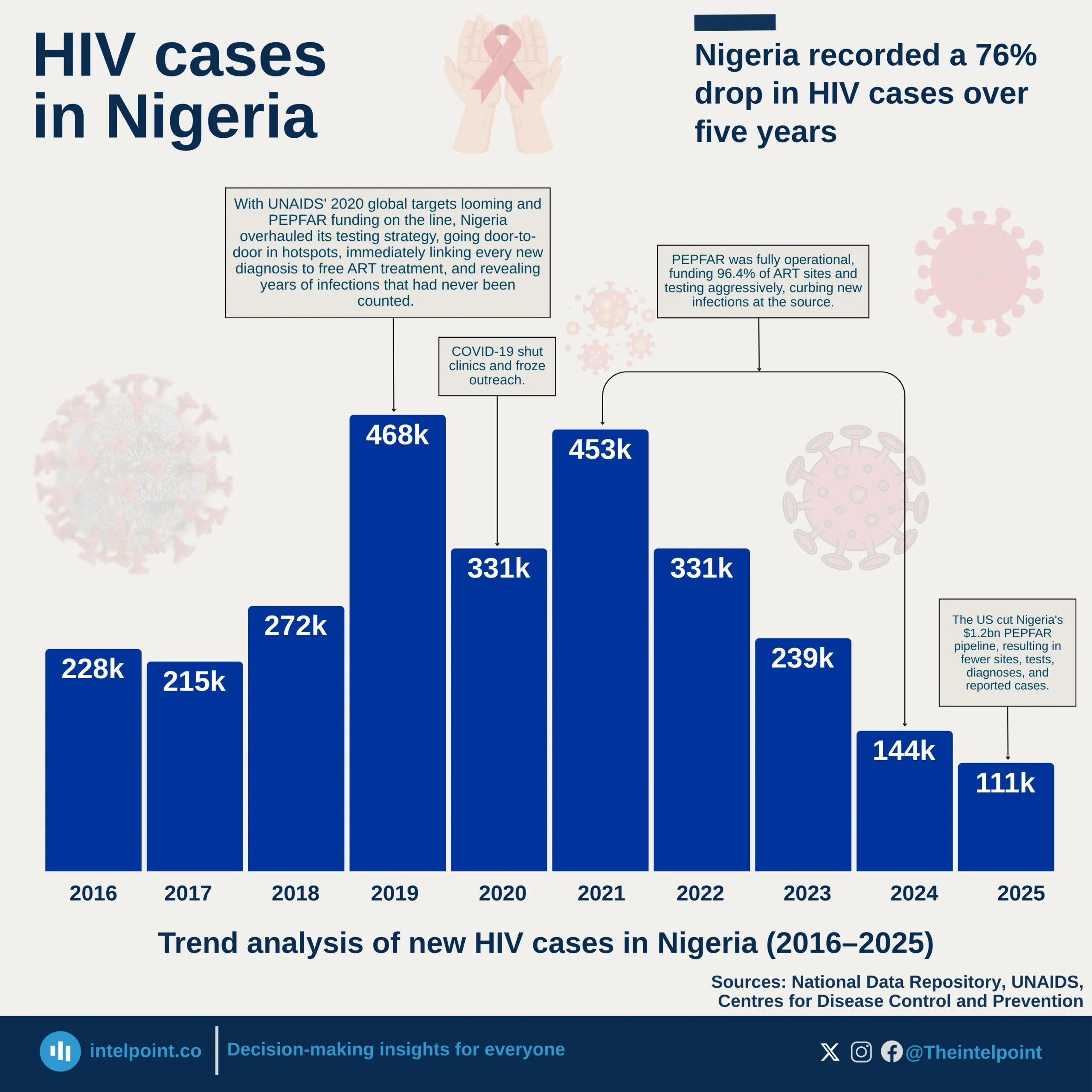
Nigeria recorded a 76% drop in HIV cases over five years
  • The 2019 number revealed the truth — years of underdiagnosis were corrected in a single year when PEPFAR restructured testing entirely.
  • The 76% decline from 2019 to 2024 is one of the most significant HIV reductions in Africa in a single decade.
  • One year of disruption in 2020 erased an entire year of progress, creating a backlog that took until 2022 to clear.
  • With PEPFAR's $1.2 billion pipeline cut, fewer Nigerians are being tested, meaning fewer cases appear on paper while the virus spreads undetected.

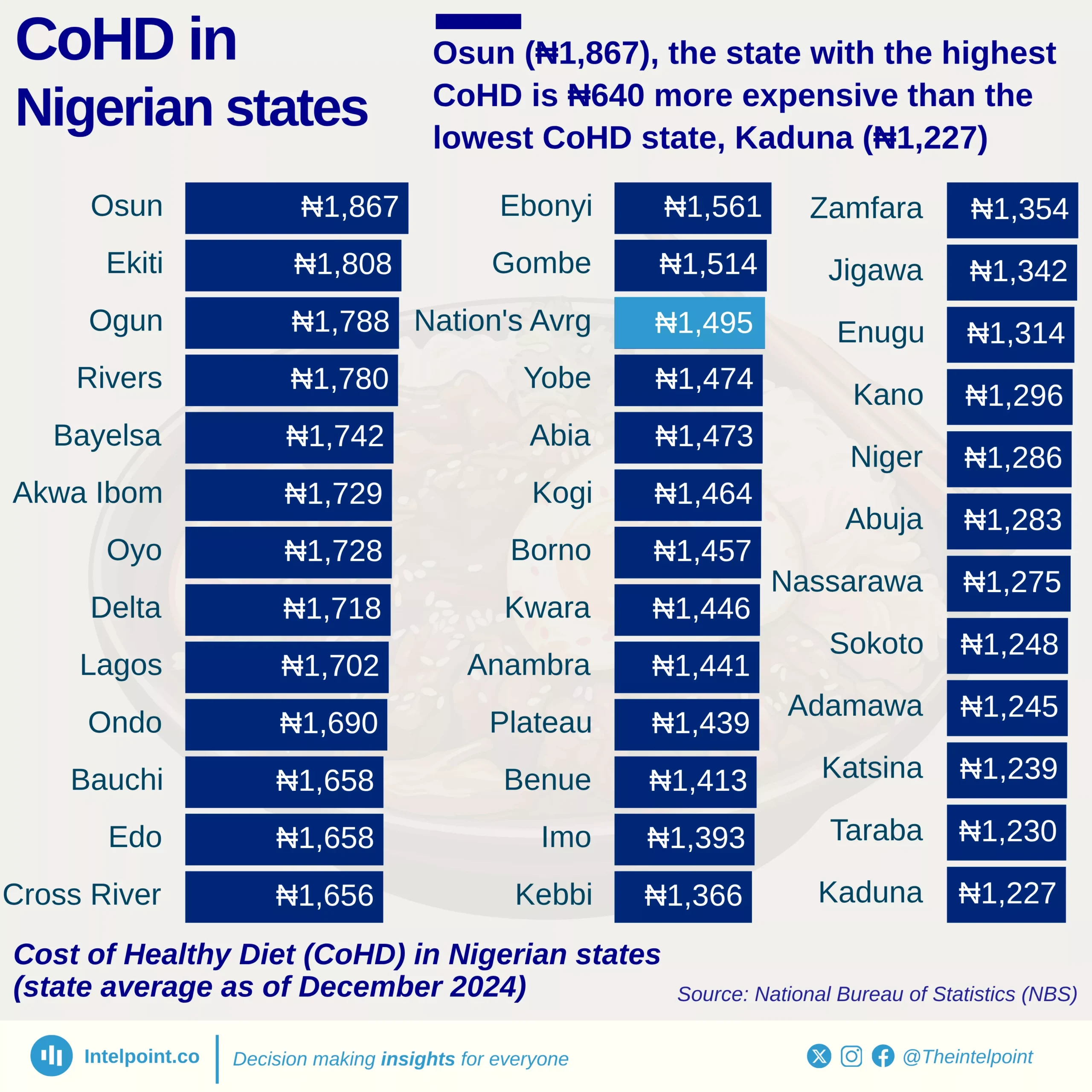
Osun (₦1,867), the state with the highest CoHD is ₦640 more expensive than the lowest CoHD state, Kaduna (₦1,227)
  • Osun (₦1,867) has the highest CoHD, while Kaduna (₦1,227) has the lowest, a gap of ₦640.
  • The national average CoHD stood at ₦1,495 as of December 2024.
  • Southern states, particularly in the South West, record the highest diet costs.
  • Northern states dominate the list of the most affordable places to eat healthy.
  • Rising costs in urban centres like Lagos (₦1,702) and Rivers (₦1,780) reflect the impact of logistics and inflation.
  • The ₦640 state gap shows inequality in dietary access, which can deepen nutrition and welfare disparities.

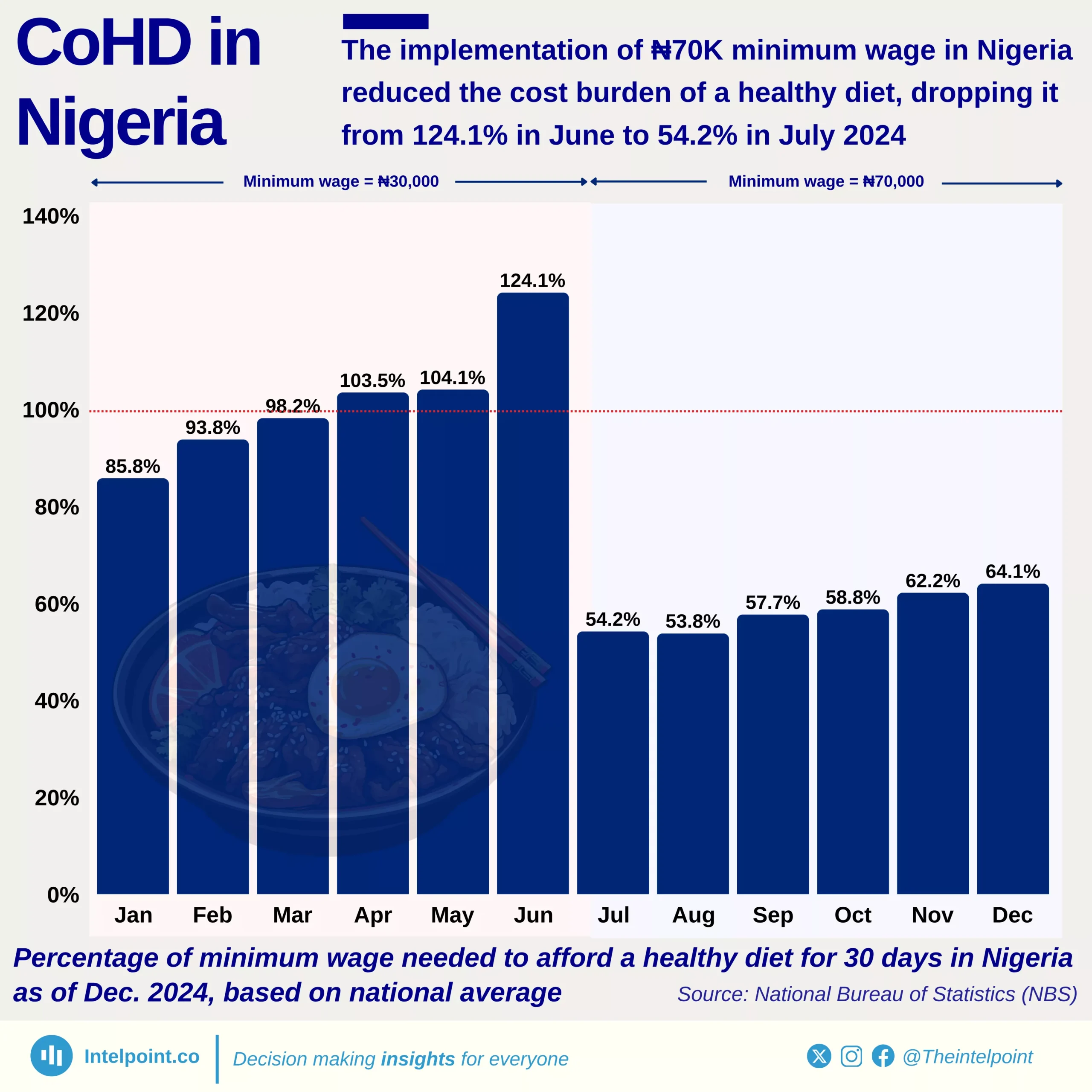
The implementation of ₦70K minimum wage in Nigeria reduced the cost burden of a healthy diet, dropping it from 124.1% in June to 54.2% in July 2024
  • The share of minimum wage needed to afford a healthy diet fell from 124.1% in June to 54.2% in July 2024, when the minimum wage was increased from ₦30,000 to ₦70,000.
  • Before July, the cost of a healthy diet for a month exceeded 100% of [the] minimum wage, making it unaffordable for minimum-wage earners.
  • The sharpest burden was recorded in June 2024, when households needed their full salary plus 24% extra to eat healthily.
  • Between July and December, affordability worsened slightly from 54.2% to 64.1%, indicating that food prices continued to rise despite the wage boost.
  • The implementation of the ₦70,000 minimum wage in 2024 provided significant relief to Nigerian households struggling with the high cost of eating healthily.

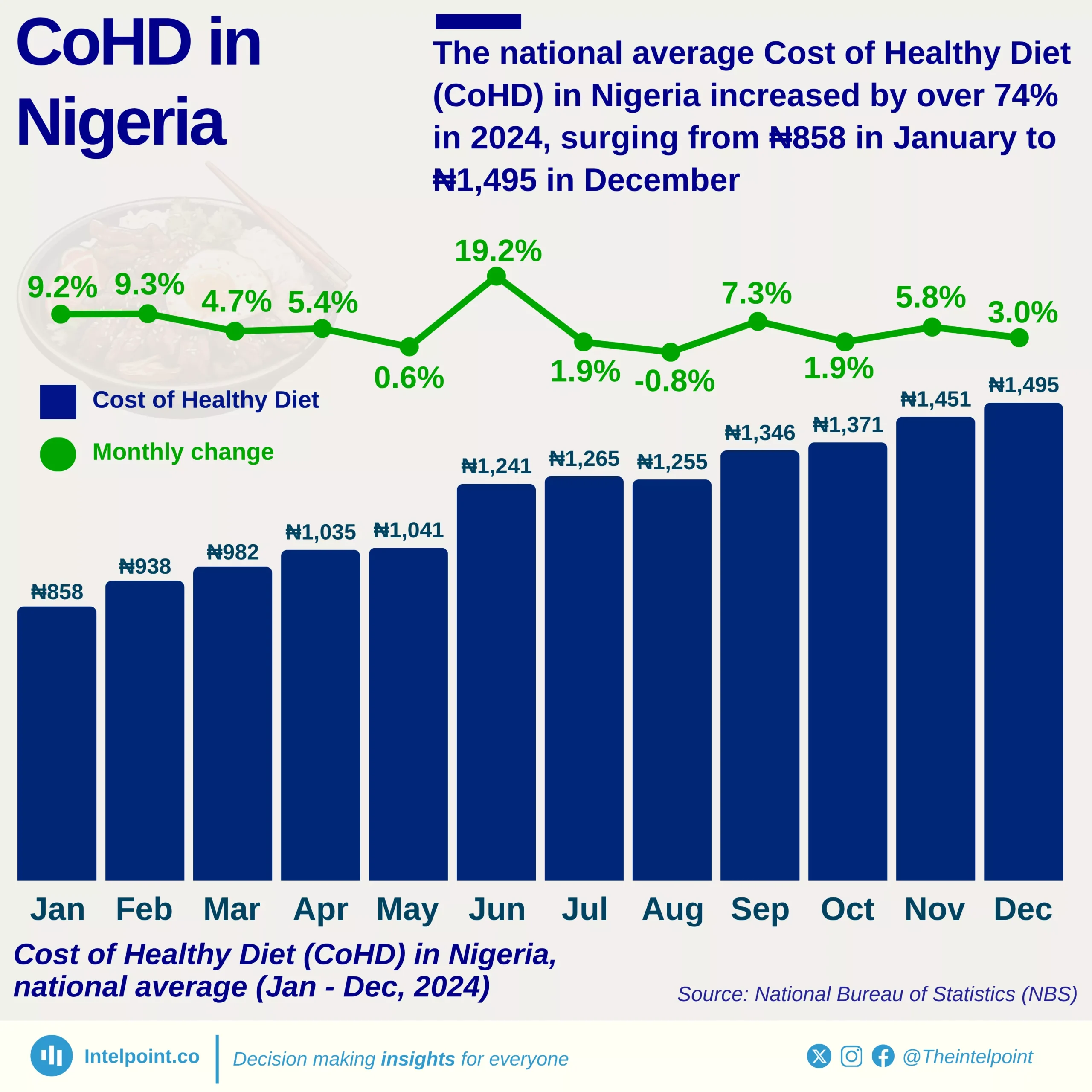
The national average Cost of Healthy Diet (CoHD) in Nigeria increased by over 74% in 2024, surging from ₦858 in January to ₦1,495 in December
  • The Cost of Healthy Diet (CoHD) in Nigeria increased by over 74% in 2024.
  • The average cost rose from ₦858 in January to ₦1,495 in December.
  • June 2024 recorded the sharpest monthly jump at 19.2%, the highest of the year.
  • From August to December, CoHD rose steadily — showing no reversal in trend.
  • The persistent rise reflects food inflation, weak supply chains, and increasing import costs.
  • For many Nigerians, maintaining a healthy diet is becoming increasingly unaffordable, threatening nutrition and welfare outcomes.

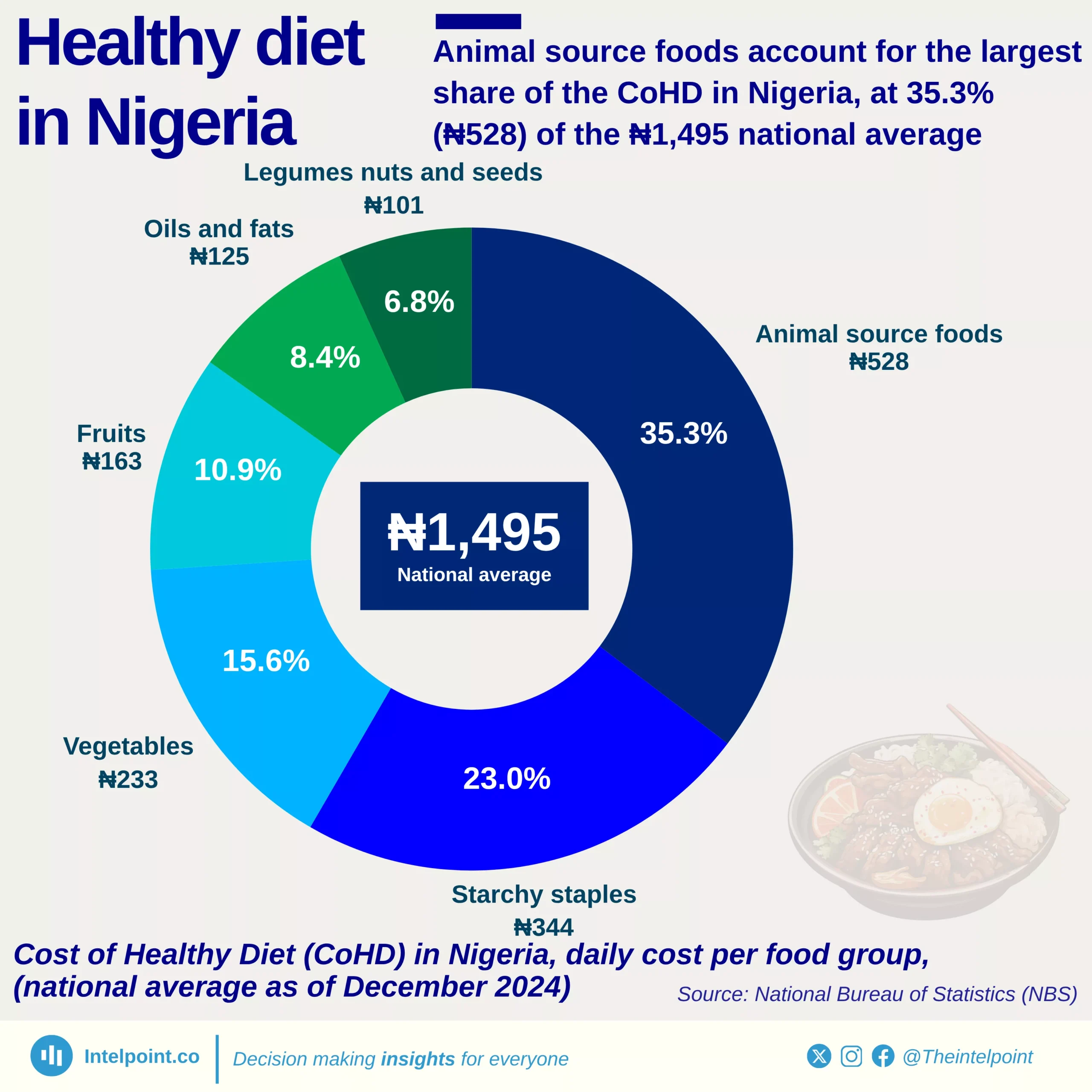
Animal source foods account for the largest share of the CoHD in Nigeria, at 35.3% (₦528) of the ₦1,495 national average
  • Animal source foods make up the largest share of Nigeria’s CoHD at ₦528 (35.3%) of ₦1,495.
  • Starchy staples follow at ₦344 (23%), showing the centrality of carbs in Nigerian diets.
  • Vegetables (₦233) and fruits (₦163) collectively account for over a quarter of the cost.
  • Legumes, nuts, and seeds (₦101) are the least costly food group, despite their nutritional value.
  • The national average CoHD stands at ₦1,495 per person per day as of December 2024.
  • Protein-rich foods are becoming increasingly unaffordable, contributing to dietary imbalance.

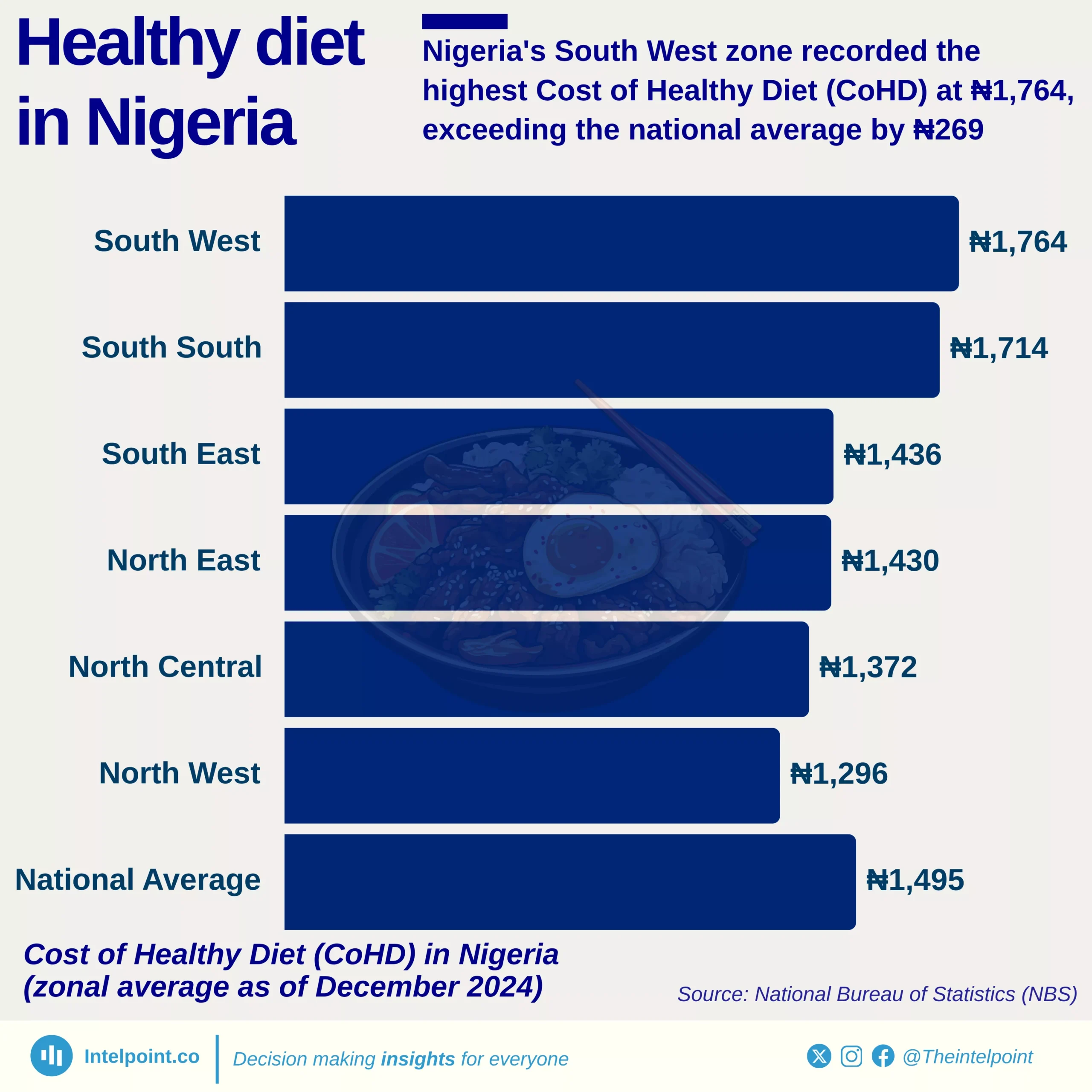
Nigeria's South West zone recorded the highest Cost of Healthy Diet (CoHD) at ₦1,764, exceeding the national average by ₦269
  • South West has the highest Cost of Healthy Diet (₦1,764), surpassing the national average by ₦269.
  • South South follows at ₦1,714.
  • South East (₦1,436) and North East (₦1,430) sit close to the national midpoint.
  • North Central and North West record the lowest CoHD at ₦1,372 and ₦1,296, respectively.
  • The national average cost of a healthy diet stands at ₦1,495 per person per day as of December 2024.
  • The regional disparities in food cost highlight the uneven impact of economic realities across Nigeria’s zones.

POPULAR TOPICS
SIGN UP TO OUR NEWSLETTER
Get periodic updates about the African startup space, access to our reports, among others.
Subscribe Here
Subscription Form

A product of Techpoint Africa. All rights reserved