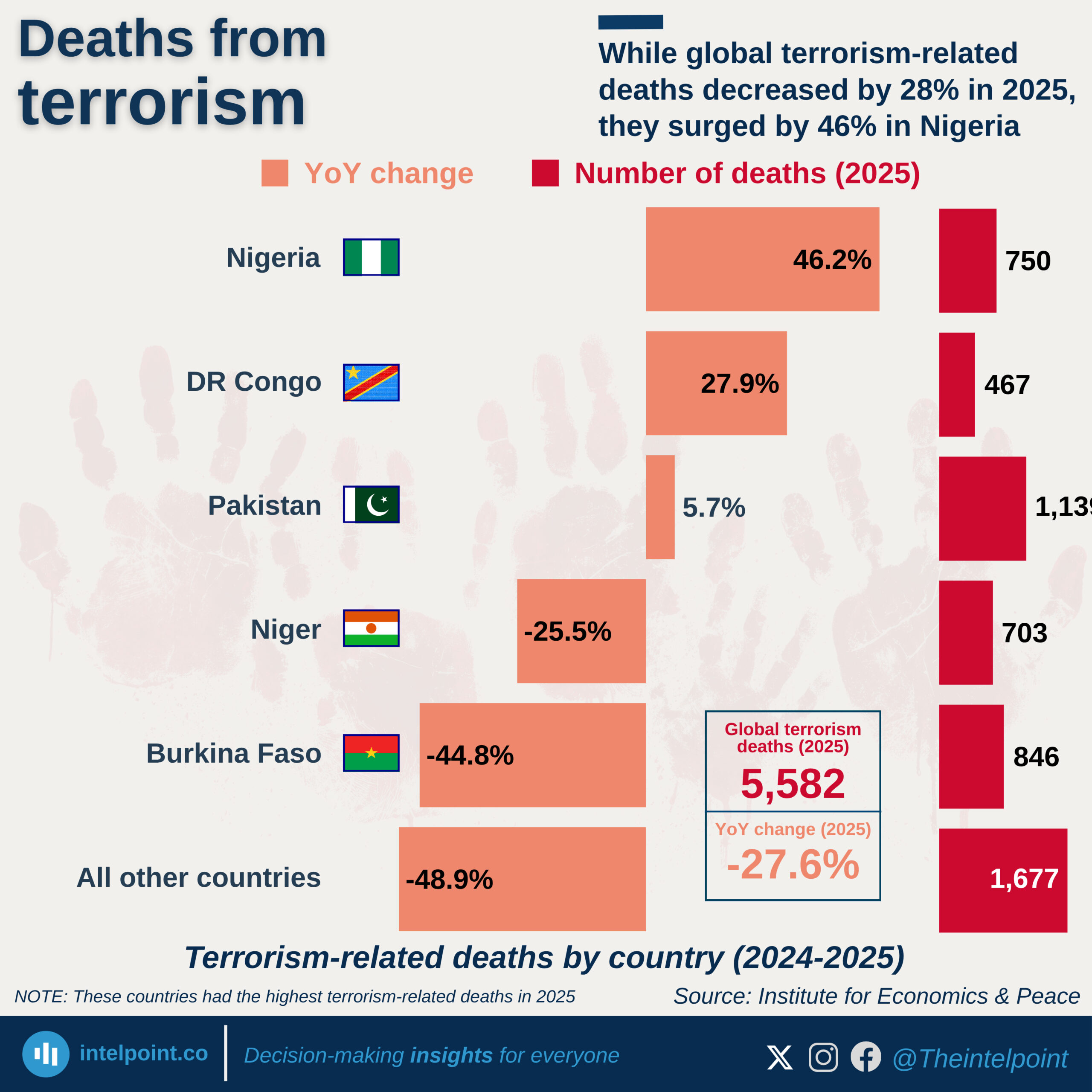
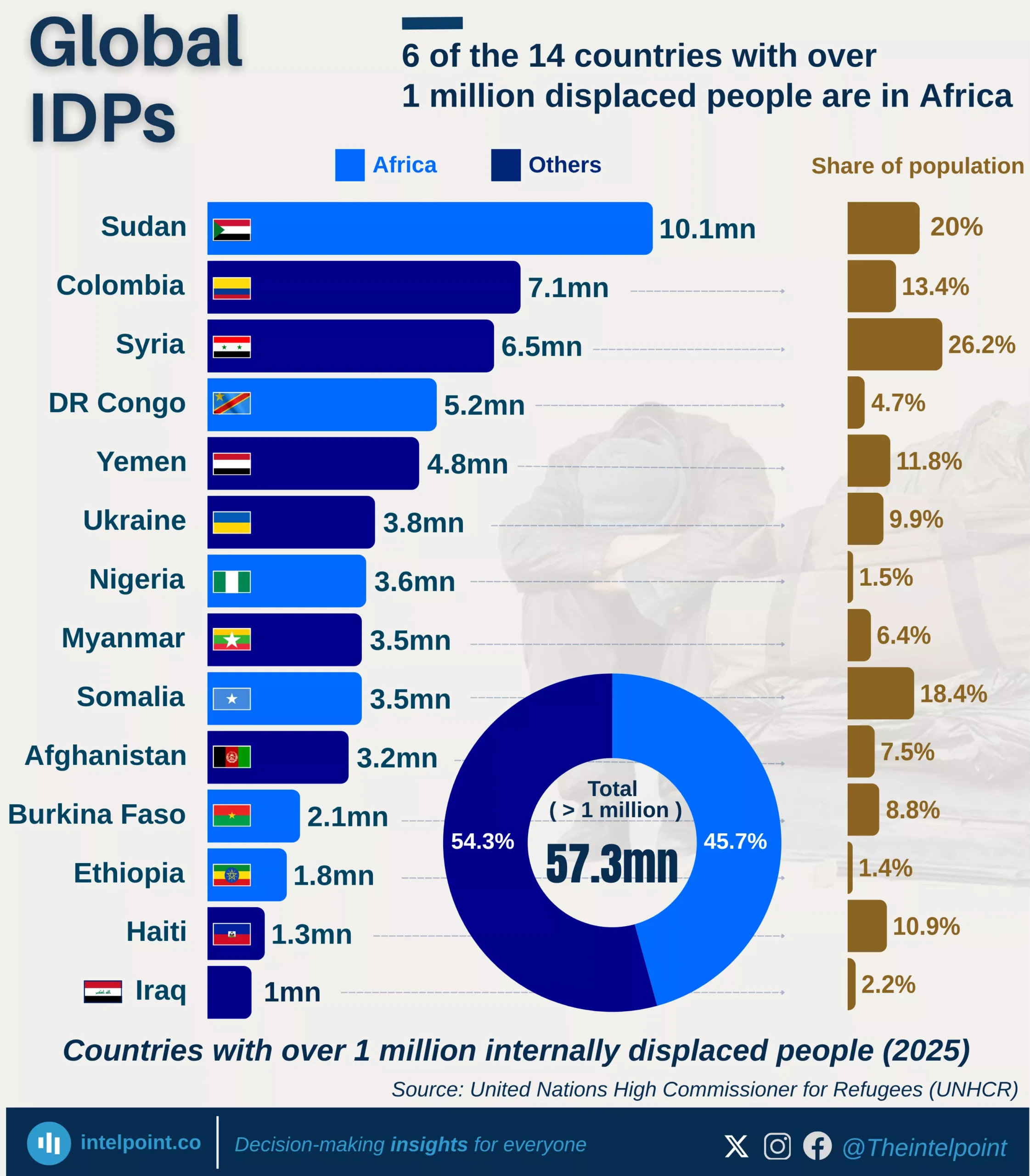
Violence, weak state capacity, and repeated humanitarian shocks continue to push people from their homes faster than stability can return. In Sudan, the war between the Sudanese Armed Forces and the Rapid Support Forces has created the world’s largest internal displacement crisis. In DR Congo, renewed fighting in the east, particularly involving M23 and other armed groups, continues to uproot millions. In Nigeria, displacement is driven by a mix of insurgency in the northeast, banditry and communal violence in the north-central region, and periodic floods that worsen existing vulnerability.
Beyond Africa, displacement is also concentrated in countries facing prolonged war, armed-group violence, or state breakdown. In Ukraine, the crisis is tied directly to Russia’s full-scale invasion and the continued destruction of homes, infrastructure, and frontline communities. In Colombia, armed groups continue to displace people as they compete for territorial control. In Syria, years of conflict, economic decline, and damaged infrastructure have kept millions uprooted. In Yemen, conflict remains the main cause, but economic collapse and climate pressures have made the crisis even harder to escape.
Globally, displacement tends to last where conflict is prolonged, institutions are weak, livelihoods break down, and safe return is not possible. In these settings, insecurity is often reinforced by climate stress, food insecurity, and limited protection systems, making displacement more persistent and recovery more difficult.