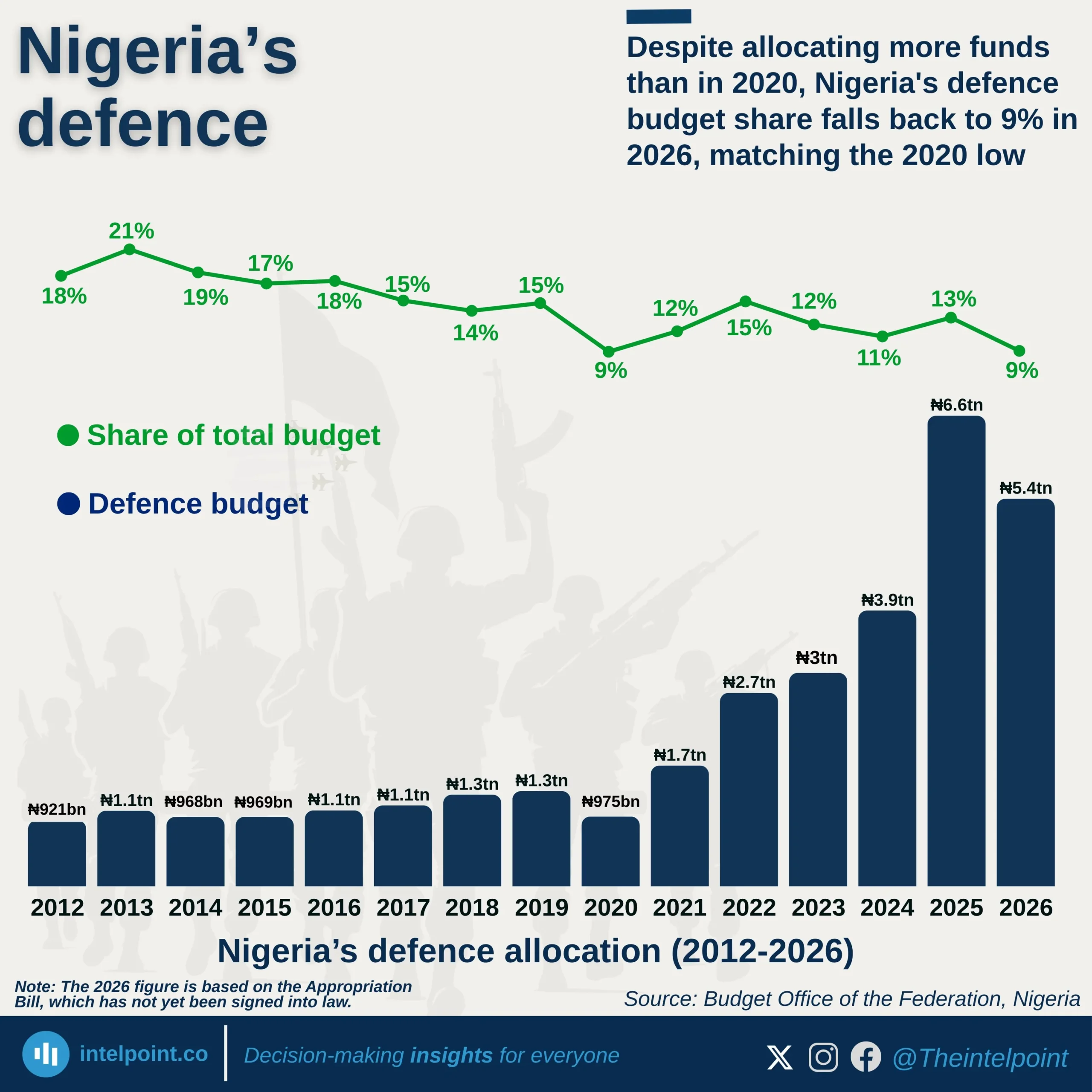
Nominal spending surged, but inflation and naira depreciation eroded real gains. From ₦921 billion in 2012 to ₦6.57 trillion in 2025, the absolute figure may seem dramatic, but Nigeria's security challenges intensified over the same period.
Defence commanded over 21% of the budget in 2013. From 2024 to 2026, that figure has fallen below 14%, with 2026 hitting a historic low of 9.3%.
Boko Haram, banditry, and separatist tensions peaked in 2020, resulting in a cut that saw defence's share fall to just 9.2%, the lowest on record at that point.
The jump to ₦6.57trn (13.2%) in 2025 marks the sharpest year-on-year absolute increase in the dataset. But 2026 reversed this again, with the rate dropping to 9.3%.
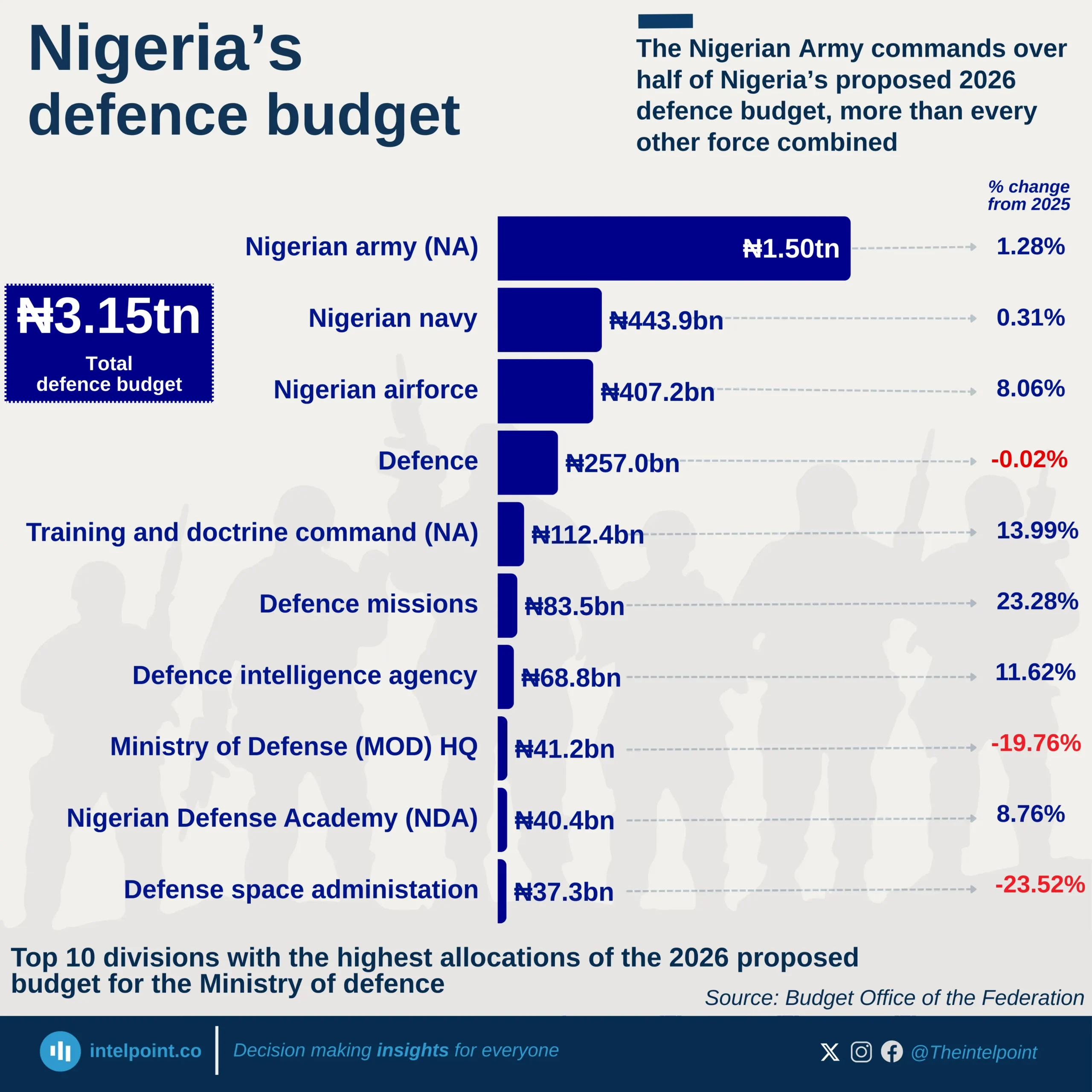
The Army has been allocated ₦1.50tn, more than half of the top-ten defence allocations, making it the backbone of Nigeria’s security spending.
The Navy (₦443.9bn) and Air Force (₦407.2bn) come next, but together they are far behind the Army.
Institutions like the Defence Intelligence Agency, Training and Doctrine Command, and Defence Missions receive meaningful but much smaller funding, reinforcing their support-role status.
The Defence Space Administration (₦37.3bn) is on the table, but its small size shows Nigeria is only cautiously stepping into cyber- and space-based security.
Can’t find what you’re looking for? Please fill the form below