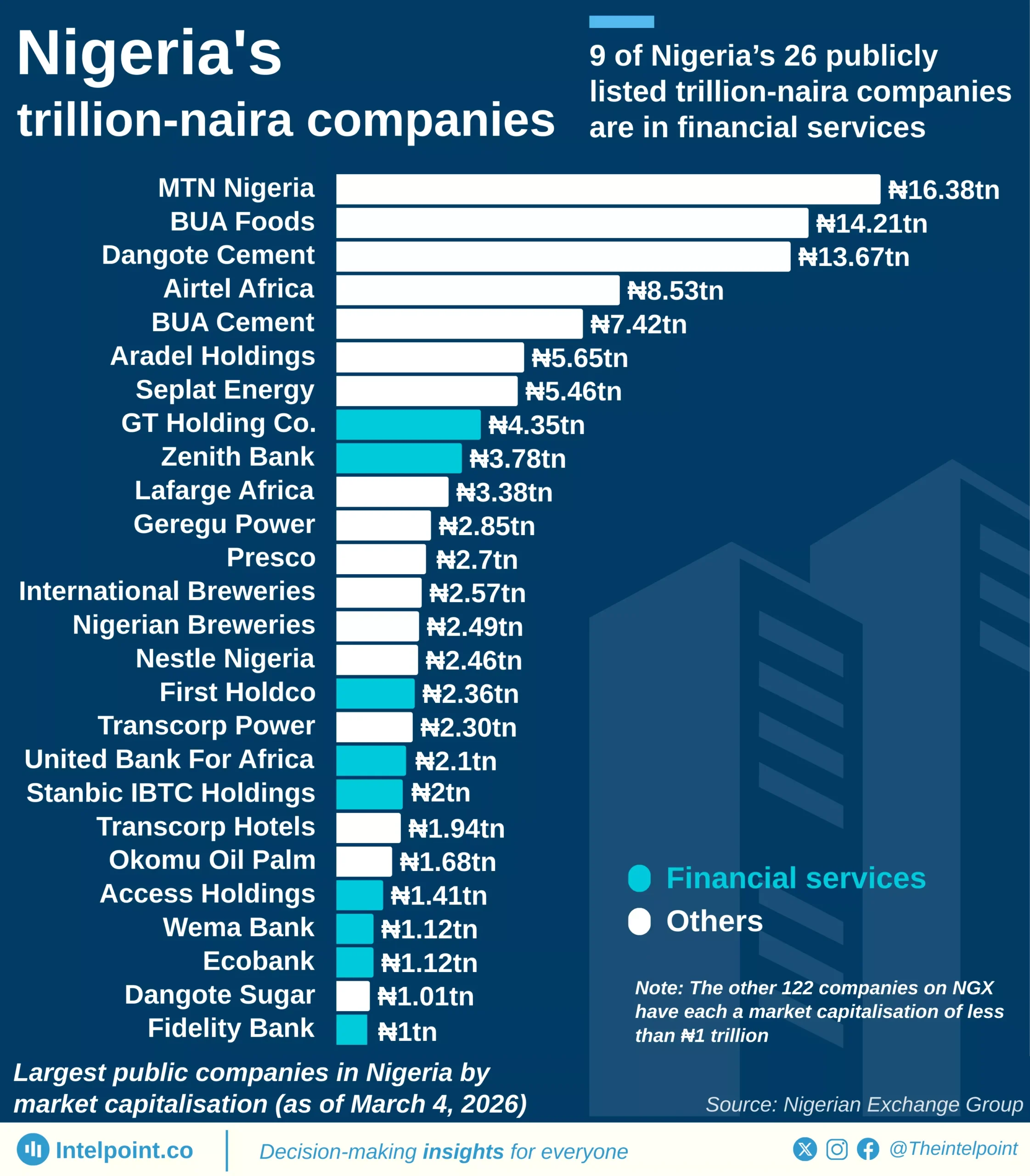
MTN Nigeria leads at ₦16.38 trillion, making it the most valuable listed company.
The top three firms (MTN Nigeria, BUA Foods, and Dangote Cement) are far ahead of the rest, each exceeding ₦13 trillion.
9 of the 26 companies are in the financial services sector.
Telecoms and manufacturing dominate the upper tier, highlighting infrastructure and essential services as market anchors.
Energy companies are firmly positioned, reflecting their central role in the economy.
Market concentration is high, as a few giants carry disproportionate weight relative to the 122 sub-₦1 trillion firms.
Sector diversity exists within the top 26, but most belong to industries tied to basic economic activity rather than emerging tech or high-growth startups.
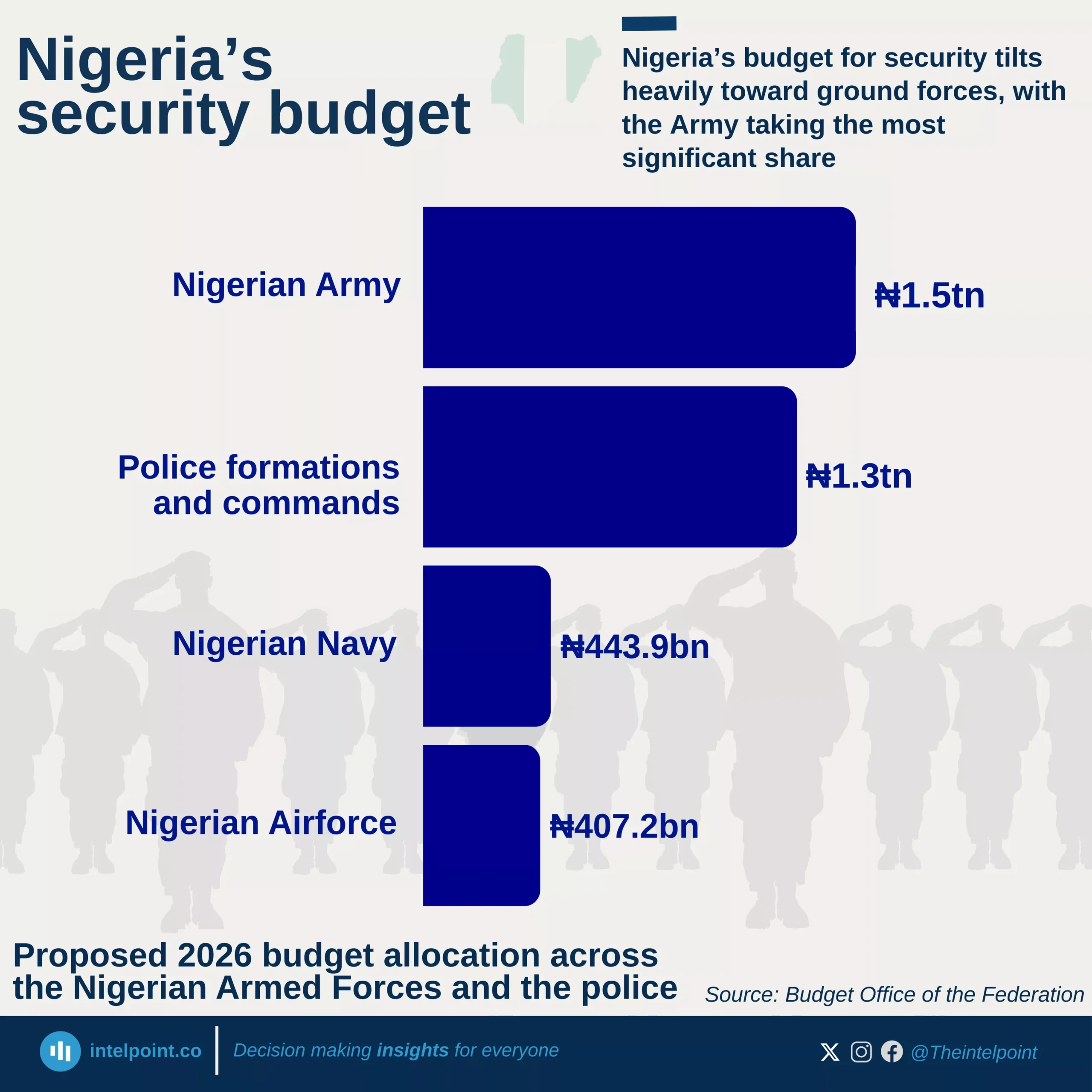
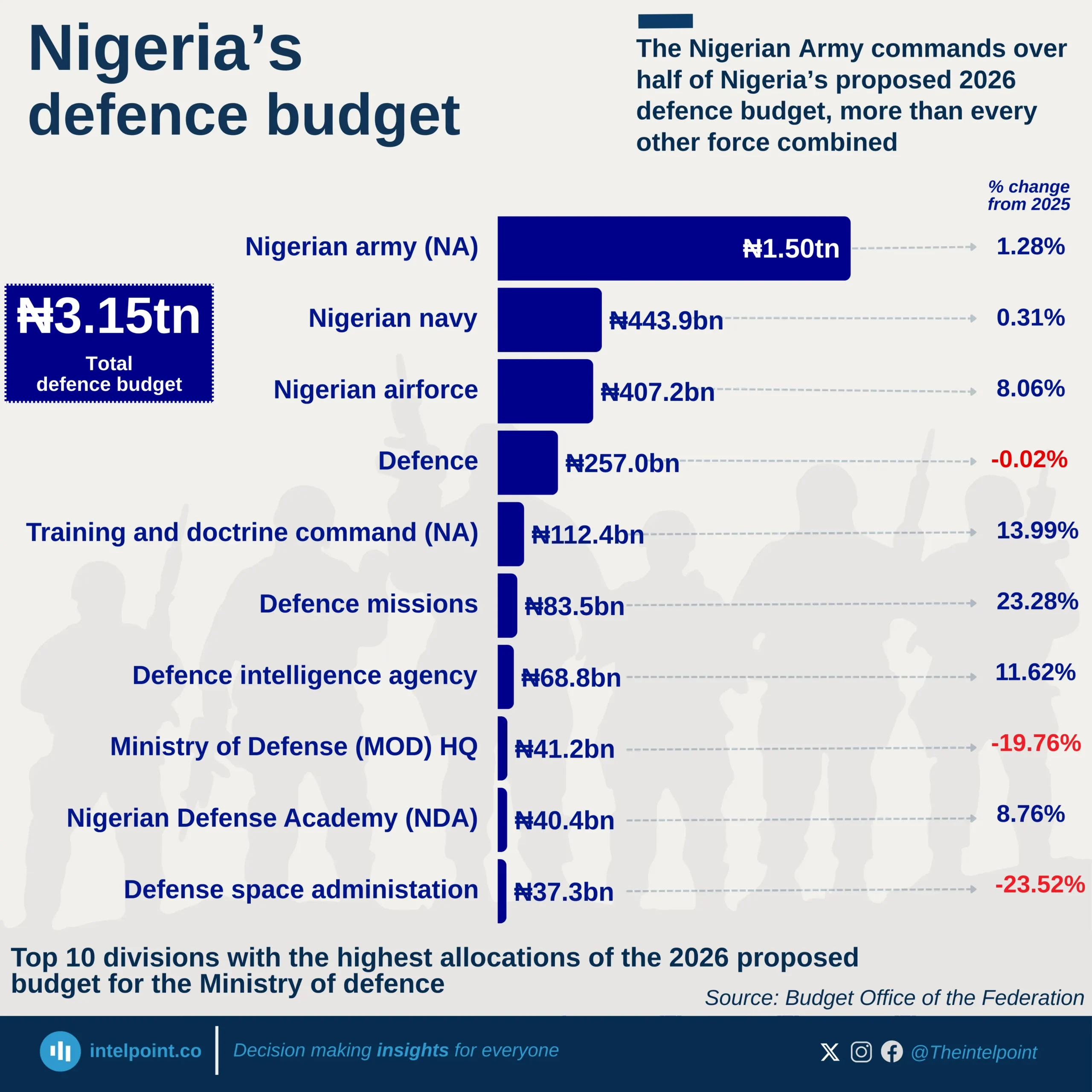
The Army has been allocated ₦1.50tn, more than half of the top-ten defence allocations, making it the backbone of Nigeria’s security spending.
The Navy (₦443.9bn) and Air Force (₦407.2bn) come next, but together they are far behind the Army.
Institutions like the Defence Intelligence Agency, Training and Doctrine Command, and Defence Missions receive meaningful but much smaller funding, reinforcing their support-role status.
The Defence Space Administration (₦37.3bn) is on the table, but its small size shows Nigeria is only cautiously stepping into cyber- and space-based security.
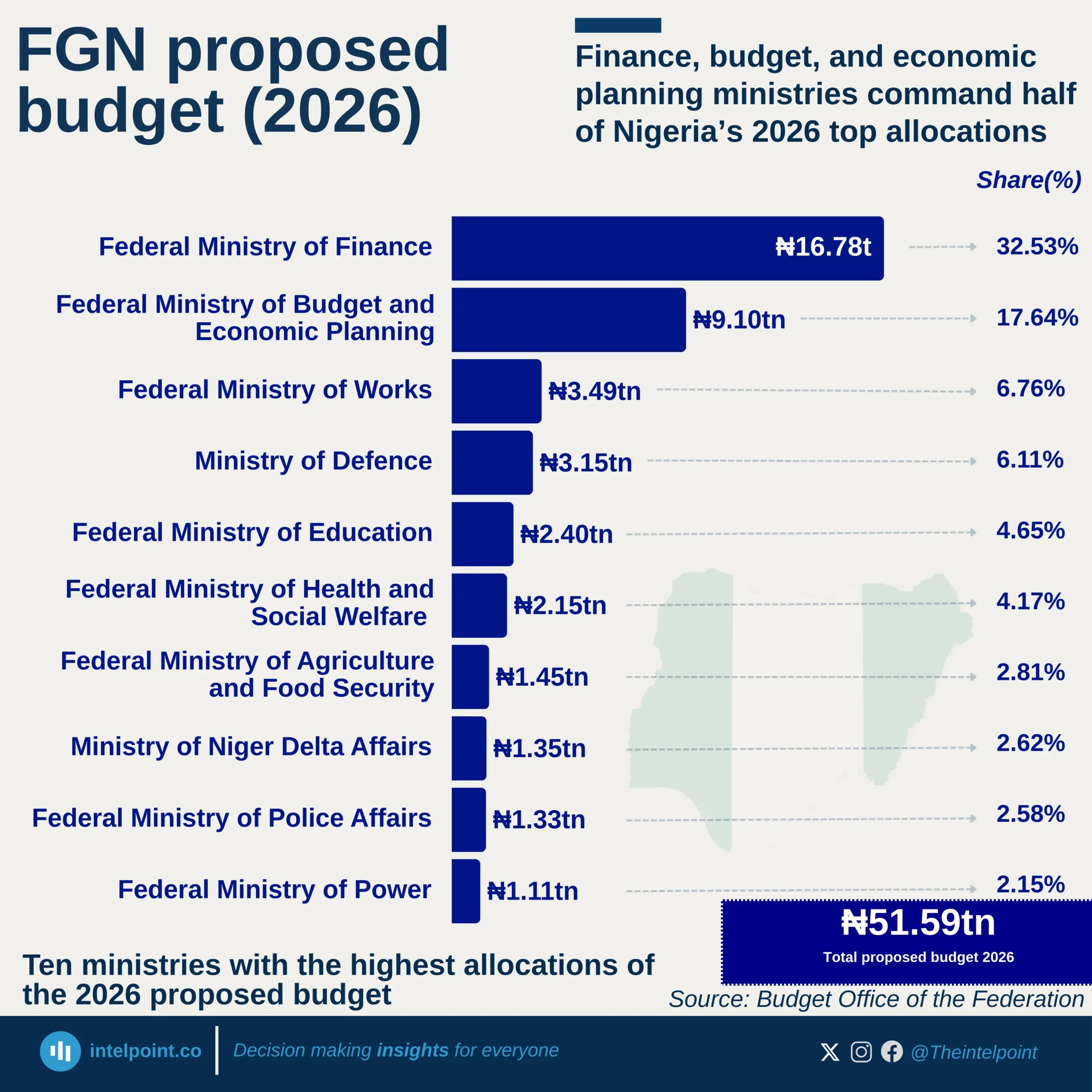
The Federal Ministry of Finance dominates with ₦16.78 trillion, accounting for nearly ₦1 in every ₦3 spent among the top ministries.
Combined, the ministries of Finance and Budget & Economic Planning control more than 50% of the listed allocations, underscoring the government’s focus on fiscal strategy and economic agenda.
The Works and Defence sectors rank third and fourth, reflecting continuous prioritisation of infrastructure development and national security.
Education and Health, while critical, receive smaller shares, signalling potential pressure points in human capital development funding