Across much of Africa, access to US dollars has become increasingly constrained. Foreign exchange shortages, tighter currency controls, and widening gaps between official and parallel market exchange rates have made it harder for individuals and businesses to obtain the world's most widely used reserve currency through conventional channels.
As these challenges persist, stablecoins are emerging as a practical alternative. Pegged to fiat currencies like the US dollar, they allow users to hold and move dollar-denominated value digitally, often without relying on traditional banking infrastructure.
But are stablecoins simply another way to access foreign currency, or are they solving a deeper structural problem? And how are platforms making access to these dollar-backed digital assets more practical for everyday users and businesses?
Key takeaways
- Foreign exchange shortages and currency controls have made it difficult for individuals and businesses in Africa to access US dollars.
- Stablecoins such as USDT and USDC are becoming the go-to digital alternative, allowing users to hold and transfer dollar-denominated value without needing physical cash or domiciliary accounts.
- Freelancers, importers, investors, and families receiving remittances use stablecoins to navigate currency volatility and cross-border payments.
- Crypto platforms like Breet make stablecoins more accessible by enabling users to buy, hold, convert, and settle digital dollars into local currency quickly.
- While stablecoins are not a replacement for the traditional financial system, they are becoming an important complement in markets where access to US dollars remains constrained.
Why access to US dollars remains a challenge in many African markets
The US dollar remains the backbone of global trade, cross-border payments, and international commerce. This makes it essential for businesses importing goods, freelancers earning from overseas clients, and individuals paying for digital services. Yet, accessing dollars through formal channels has become increasingly difficult across several African economies.
In Nigeria and Ghana, for example, recurring foreign-exchange (FX) shortages have constrained the supply of dollars. What's more, currency depreciation has widened the gap between official and parallel market exchange rates.
Similar pressures have been felt in countries like Egypt, where FX scarcity has disrupted imports and business operations. According to the International Monetary Fund (IMF), persistent external financing pressures and limited foreign currency reserves continue to strain many emerging and developing economies, particularly those dependent on imports.
For many individuals and businesses, this means longer wait times, restricted access to foreign currency, and higher costs. When official channels can't meet demand, people naturally begin looking for alternatives.
Stablecoins are becoming a digital alternative
One alternative gaining traction is stablecoins. These are cryptocurrencies designed to maintain a stable value by being pegged to assets like the US dollar.
Unlike Bitcoin or Ether, whose prices can fluctuate significantly within hours, dollar-backed stablecoins such as USDT and USDC are designed to trade close to one US dollar, making them more suitable for payments, savings, and everyday transactions.
Because of that stability, many users consider them 'digital dollars.' They can be sent across borders in minutes, stored in digital wallets, and converted into local currency when needed. Their utility has fueled rapid adoption, particularly in emerging markets.
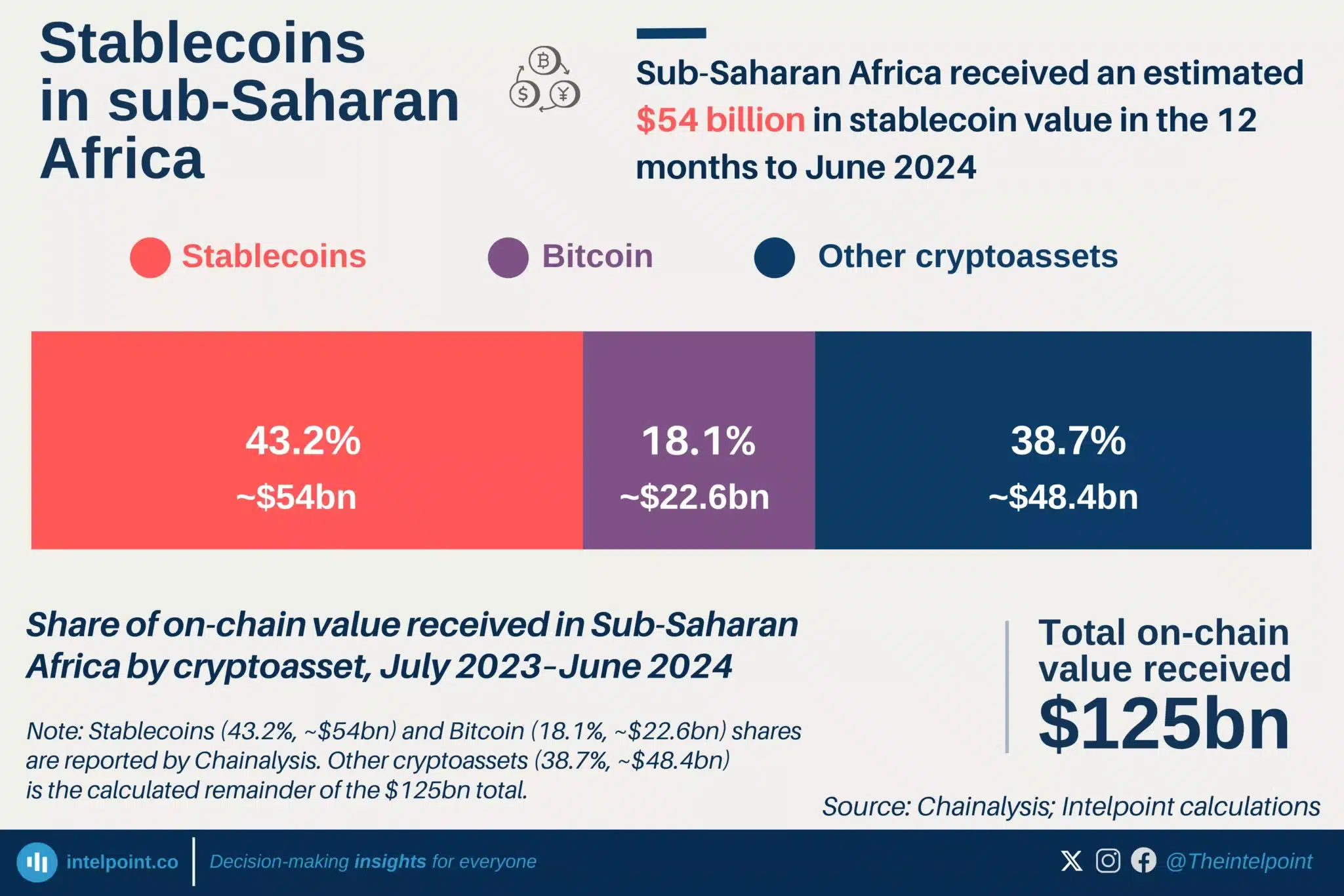
According to Chainalysis, stablecoins now account for an increasing share of cryptocurrency transaction volume in regions experiencing currency volatility and limited access to hard currencies. Across sub-Saharan Africa, crypto transaction volume grew 52% year-on-year to reach $25 billion by March 2025, with stablecoins accounting for 43% of that activity. In Nigeria alone, stablecoin-related volume logged close to $22 billion in 2024.
Who is using stablecoins and why?
Stablecoins appeal to different users for different reasons, but they all solve a common problem of access to dollar-denominated value.
- Freelancers and remote workers use them to receive payments from international clients without the delays or fees associated with traditional banking.
- Some investors hold stablecoins to protect their savings from local currency depreciation.
- Importers, exporters, and SMEs rely on them to pay overseas suppliers when foreign exchange is difficult to obtain.
- Families receiving cross-border remittances use them as a faster, often cheaper alternative to conventional money transfer services.
In each case, stablecoins offer a more accessible way to send, receive, or preserve value across borders.
How crypto platforms simplify access and conversion
While stablecoins offer a digital alternative to US dollars, their usefulness depends on how easily people can buy, hold, and convert them. Crypto infrastructure platforms play a crucial role here.
Rather than navigating multiple exchanges or arranging peer-to-peer trades, users can purchase stablecoins like USDT, store them securely, and convert them into local currency through platforms built to simplify the process. Beyond just access, the goal is to make digital dollars practical for everyday use.
Breet is one example of this evolving infrastructure. Operating in Nigeria and Ghana, the platform enables users to buy supported stablecoins, convert them into local currency, and receive payouts directly into their bank accounts.
For businesses, Breet's API provides instant stablecoin liquidity, settling crypto payments in naira or cedis in minutes. The platform handles the underlying complexity (wallet infrastructure, private key management, and AML screening) behind the scenes so businesses can focus on their operations. This makes it easier to access working capital without waiting on traditional foreign exchange channels.
As more individuals and businesses incorporate stablecoins into their financial activities, platforms like Breet help close the gap between digital assets and local banking systems.
Benefits and limitations of stablecoins
Stablecoins are gaining traction because they address real financial challenges.
For individuals:
- They offer quicker access to dollar-denominated value without relying entirely on traditional banking systems.
- Cross-border transfers can often be completed faster and at a lower cost than conventional remittance channels.
- People in inflation-prone economies can use dollar-backed stablecoins to preserve the value of their savings.
For businesses:
- Stablecoins provide greater flexibility in paying international suppliers.
- Receiving overseas payments.
- Managing liquidity in markets where foreign exchange is scarce.
However, stablecoins are not without limitations.
- Regulatory frameworks for cryptocurrencies remain uneven across Africa. Some countries have introduced frameworks for stablecoins, while others maintain restrictions, creating uncertainty for users and businesses alike.
- Access also depends on digital infrastructure, including reliable internet connectivity and a basic understanding of how digital wallets and blockchain transactions work.
- Users often rely on third-party platforms to buy, sell, or convert stablecoins, introducing counterparty risk.
- Issuer-related risks also exist, as stablecoins depend on the entities behind them maintaining sufficient reserves and transparent governance. This concern came into sharp focus during the 2023 USDC de-pegging event.
Like any financial tool, stablecoins are most effective when users understand both their advantages and their limitations.
Could stablecoins reshape dollar access in Africa?
Stablecoins are unlikely to replace banks or eliminate the need for traditional foreign exchange markets. But they are steadily becoming an important part of Africa's financial infrastructure.
As businesses' adoption of digital payments rises, institutions explore blockchain-based settlement, and regulators develop clearer frameworks, stablecoins could complement the existing financial system. For individuals and businesses navigating persistent dollar shortages, the value of stablecoins lies in expanding choice. Platforms like Breet demonstrate how the supporting infrastructure is evolving to make digital dollars easier to access, hold, and convert.
If that trend continues, stablecoins may play an important role in improving access to global finance across the continent.